Most Read
8 min read
Can You Build an ADU on Your California Property? 7 Factors to Check | TBHC

Published
October 28, 2026
Published
October 28, 2026
Not every backyard is equally suited for an ADU.
California has made ADU development more accessible by limiting many local restrictions and requiring qualifying ADU applications to be processed ministerially. But that does not mean every property can accommodate every type or size of ADU.
Before choosing a floor plan or requesting a construction quote, homeowners should evaluate the property itself.
The most important questions involve property eligibility, setbacks, available space, access, utilities, zoning and site conditions.
California's Department of Housing and Community Development (HCD) updated its ADU Handbook in March 2026, reflecting state law changes effective January 1, 2026.
Here are seven factors to evaluate before moving forward.
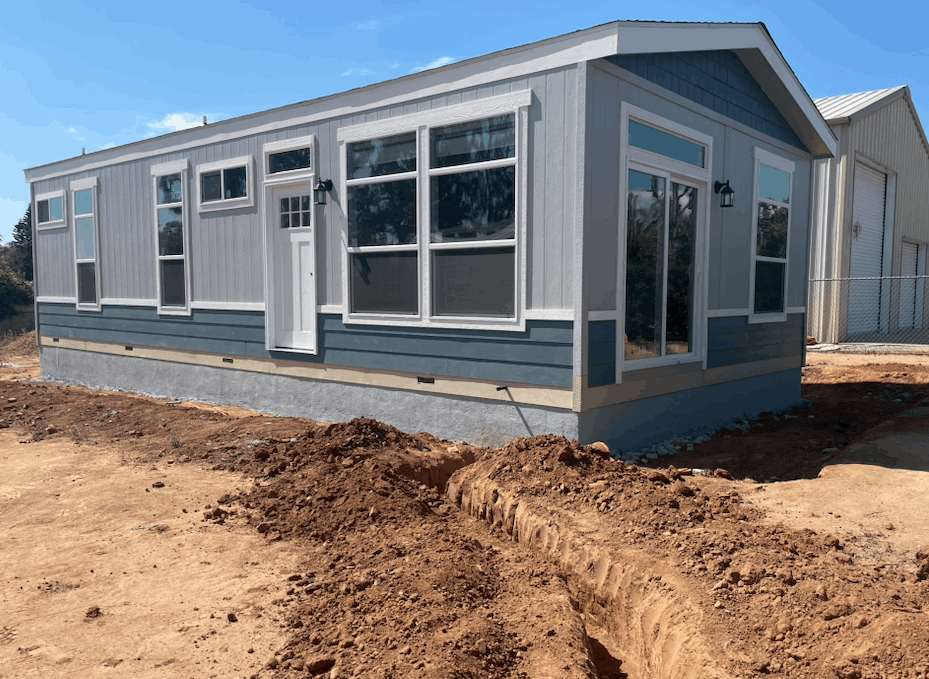
The first question is whether your property and existing development qualify for an ADU under California law.
An ADU is a secondary dwelling with complete independent living facilities, including provisions for living, sleeping, eating, cooking, and sanitation. California's definition can include detached and attached ADUs, converted existing spaces, and manufactured homes.
California's ADU framework generally applies to residential and certain mixed-use properties, but the specific type of ADU that can be developed depends on the property and circumstances.
For example, state law provides specific pathways for detached ADUs on lots with an existing or proposed single-family dwelling. One state-mandated pathway allows a detached ADU of up to 800 square feet with specified height and setback rules.
The first step is therefore not choosing a house. It's determining what your property can support.
The size of your backyard is important, but usable space matters more than total lot size.
An ADU may need to fit around:
A large lot does not automatically mean you can build a large ADU.
Likewise, a relatively small property may still accommodate an ADU under California's state provisions.
This is why property feasibility should be evaluated using an actual site plan, rather than estimating available space by looking at the backyard.
Setbacks determine how close an ADU can be located to property lines and, in some circumstances, other structures.
For many new construction ADUs, California law limits required side and rear setbacks to no more than four feet.
There are important exceptions and different rules depending on how the ADU is created.
For example, certain ADUs created within existing structures are not subject to the same four-foot side and rear setback requirement. California law also contains specific rules concerning front setbacks and certain state-mandated ADUs.
This means you should not assume that a general setback number applies to every ADU project.
The applicable setback depends on the type of ADU and the specific property.
For a manufactured ADU, property access is especially important.
The home must ultimately be transported to the property and positioned in the proposed location.
The site evaluation should therefore consider:
An ADU needs to function as an independent dwelling, so utility infrastructure is an important part of feasibility.
The property should be evaluated for:
The distance between existing utilities and the proposed ADU can affect both the design and the project cost.
California HCD identifies the availability and accessibility of water, sewer and other utility infrastructure as factors that can affect residential development feasibility.
For an ADU, the question isn't simply "Do I have utilities?"
It is:
Can the existing utility infrastructure serve the proposed ADU at its planned location?
California has statewide ADU laws, but local jurisdictions can still have compliant objective standards that affect how an ADU is designed and placed.
These standards can address issues such as:
California law limits how restrictive these standards can be. For example, jurisdictions generally cannot impose minimum lot-size requirements for ADUs and cannot require side or rear setbacks greater than four feet for new construction ADUs.
However, local rules still matter.
The applicable requirements can differ between jurisdictions, so homeowners should verify the requirements for the city or county where the property is located.
Even when a property meets the basic ADU requirements, physical site conditions can affect feasibility and cost.
Potential issues include:
These conditions don't automatically make an ADU impossible.
They may, however, influence where the ADU can be placed, which foundation system is appropriate, how utilities are routed, and how much site preparation is required.
For manufactured ADUs, these considerations are particularly important because the home, delivery process, foundation, and site must all work together.
A small lot does not automatically prevent you from building an ADU.
California's current ADU law places limits on local agencies' ability to impose minimum lot-size requirements.
However, the available building area can still be constrained by:
The important distinction is between lot size and buildable area.
A property can be legally eligible for an ADU while still requiring careful planning to determine the best location and size.
Before selecting an ADU, review these seven questions:
| Factor | What to Check |
|---|---|
| 1. Property eligibility | Can an ADU be developed on the property? |
| 2. Available space | Is there enough usable area for the desired ADU? |
| 3. Setbacks | Where can the ADU legally be placed? |
| 4. Access | Can the home, materials, and equipment reach the installation area? |
| 5. Utilities | Can water, sewer, electrical and other services reach the ADU? |
| 6. Zoning | What objective local standards apply? |
| 7. Site conditions | Are grading, soil, drainage, trees or other conditions significant? |
If all seven areas look workable, the next step is a detailed property evaluation and site plan.
Choosing an ADU before evaluating the property can lead to unnecessary changes later.
The better approach is to work in this order:
Property → Site → ADU → Engineering → Permitting → Construction
Not:
ADU → Property → Problems
Backyard Home Company's process begins with property evaluation and planning before moving into engineering, permitting, foundation construction, delivery and installation.
This is particularly important for manufactured ADUs because the selected home must work with the site, foundation, transportation route, utilities and final installation.
California's ADU laws make it easier for many homeowners to add a second dwelling, but every property has its own physical and regulatory constraints.
Backyard Home Company can help evaluate your property and determine what type of manufactured ADU may be appropriate.
Not necessarily. California allows ADUs in many residential circumstances, but the specific property, existing development, ADU type, site conditions, and applicable standards determine what can be built.
There is no single minimum backyard size that applies to every ADU. The usable area depends on the property's layout, setbacks, existing structures, access, utilities, and applicable development standards.
For many new construction ADUs, required side and rear setbacks cannot exceed four feet under state law. Different rules can apply to certain types of ADUs, so the specific project needs to be evaluated.
The ADU needs appropriate utility services, but the exact infrastructure requirements depend on the property and jurisdiction. Existing utility capacity, connection points, and distances to the ADU should be evaluated during planning.
Potentially. California law limits local minimum lot-size restrictions for ADUs, but the actual buildable area can still be affected by setbacks, existing structures, access, utilities, height, lot coverage, and other requirements.
Yes. California's ADU definition includes manufactured homes.
Yes. State law establishes the overall framework, but local jurisdictions may apply compliant objective development and design standards. The applicable city or county requirements should be confirmed before finalizing the ADU design.
A property-specific feasibility evaluation is the best starting point. It should consider the proposed ADU, site layout, setbacks, access, utilities, foundation requirements, and applicable local standards.
We proudly serve homeowners throughout Southern California with complete design-build manufactured ADU solutions.
© Copyright 2030 Accessory Housing Partners Llc - All Rights Reserved
This website is designed and managed by Eleana Inc.